Fountain Pen Spotlight: Asvine P20
Disclosure: This post contains Amazon affiliate links. If you click and make a purchase, I may earn a small commission.

Today we’re looking at the Asvine P20, which is a budget-friendly ($28 USD as of writing this post) piston-filling fountain pen of a certain Italian styling (let’s not beat around the bush about that — it looks like a Leonardo/Omas/Maiora). I’m not going to delve into that, but I will be answering a very simple question: Is it a good pen?
The Build
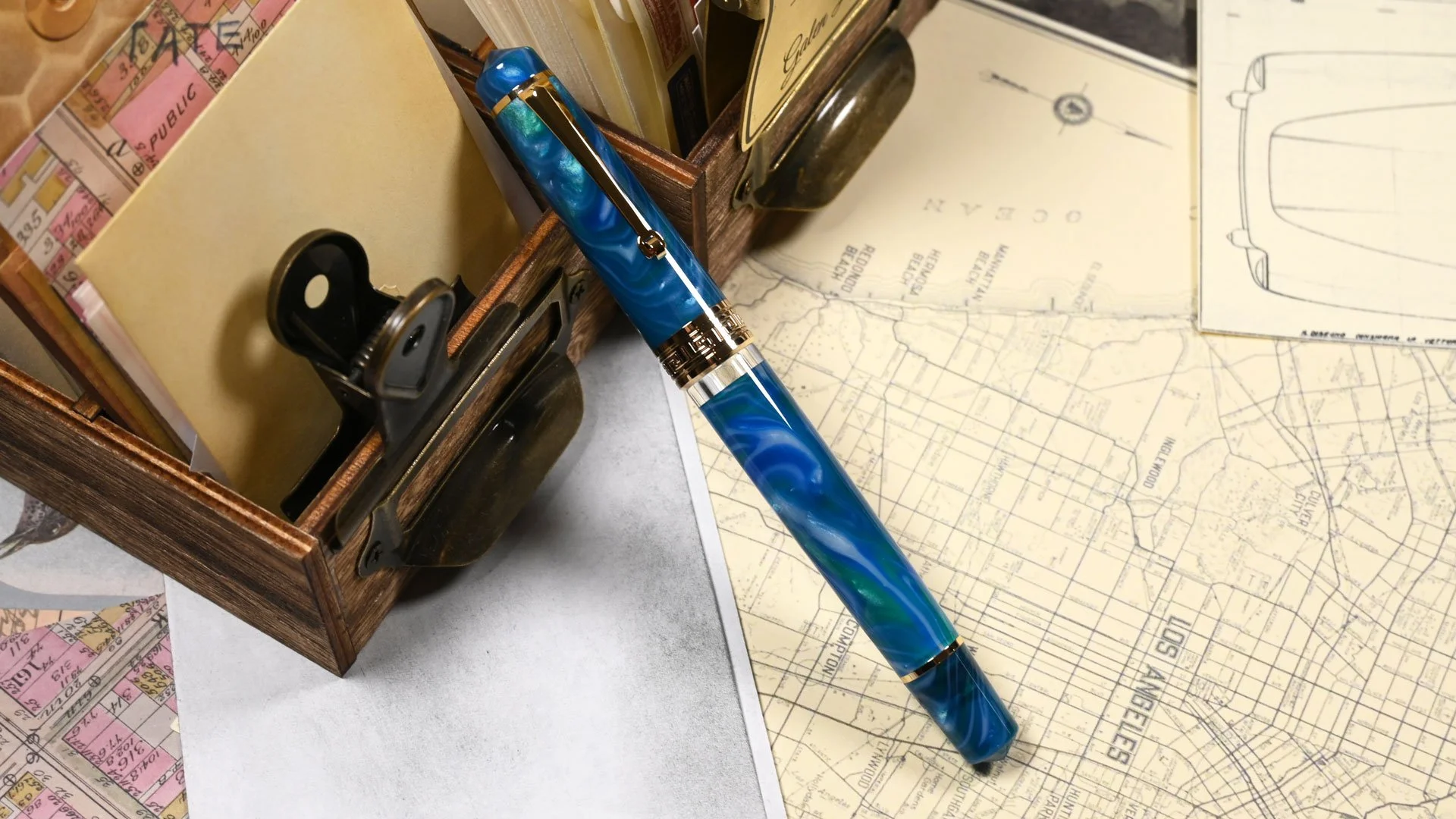
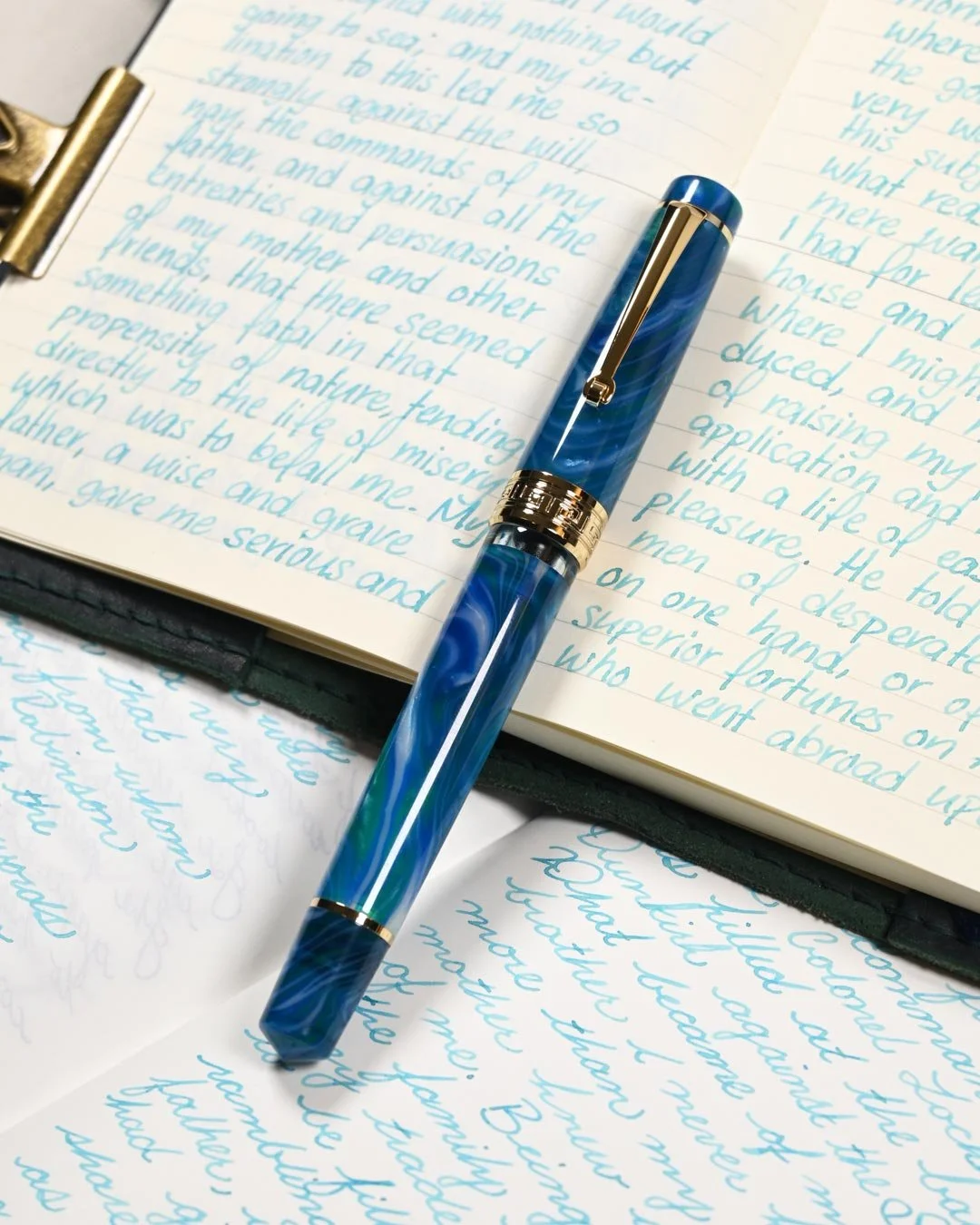
Focusing on the Ocean Blue colorway, the material is beautiful at a glance, with a striking blue-and-green swirl and a hint of milky, almost silvery white. I don’t generally like white mixed into the swirls on my fountain pen materials, but it has a slight translucence and brilliance to it that I think works quite well with the overall colorway. The whole thing is also very chatoyant — much more than I thought it would be based on the product images. It looks great when rotating it around in the light. For the most part, I’m very happy with the material.
A quick note — this is an acrylic and should not be cleaned with alcohol under any circumstances.

I say “only for the most part” because there’s one small thing dragging it down: bubbles. I only saw them on the Ocean Blue, and they’re not terribly apparent, but if you’re looking closely, you won’t miss them. I don’t even want to call them ugly, but I can see it bothering a lot of people. As I said, the Ocean Blue is the only one I have with this issue, but it’s worth mentioning. I’m personally not bothered by it, and at this price point, I can forgive it.

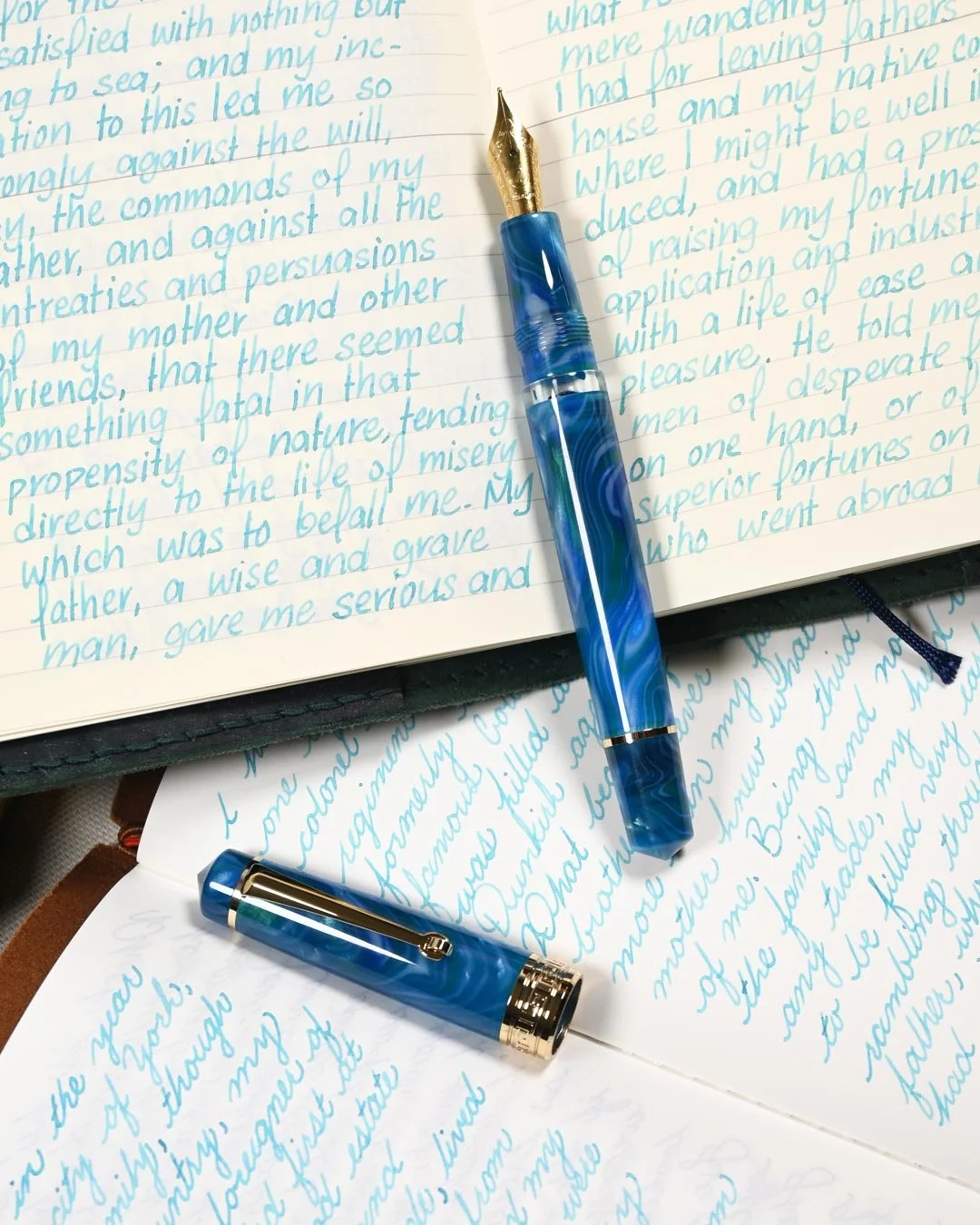
The details are beautiful as well. It has a thick, Greek key pattern cap band and roller clip that suits the shape of the pen nicely. The clip isn’t too tight or loose and functions well. I was expecting to see some branding on the cap band, but other than on the nib, there’s surprisingly no branding anywhere else on the pen.

There’s even an ink window, and aesthetically, it’s my favorite part of the pen. It’s crystal clear and adds nicely to the overall elegance of the pen’s design.
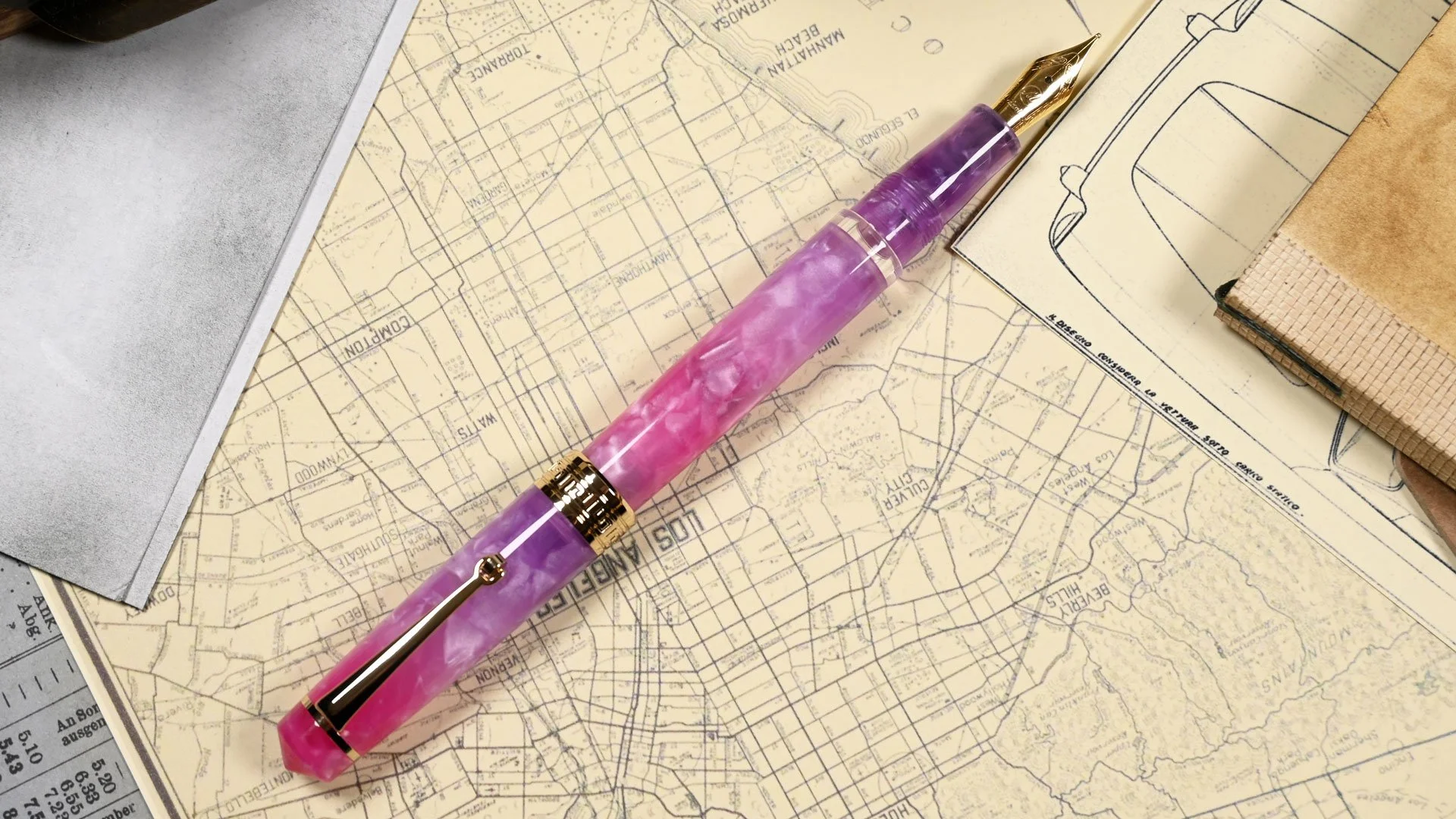
The cap will loosely post; however, I don’t recommend it because it isn’t secure and back-weights the pen too much for my liking. Being that the pen is a piston filler, it also has the unfortunate chance of accidentally turning the piston knob and leading to a disaster in the shade of whichever ink you’ve chosen.
On the subject of the piston, it feels great. I wouldn’t say it’s quite buttery smooth, but it’s not far off. Perhaps I can feel a slight sandiness here and there when using the mechanism, but I really have to feel for it. It’s nice. Being a piston filler also means it has a nice ink capacity of around 1.5-2mls, depending on how you want to go about filling it.
Dissasembly

The piston mechanism can also be disassembled for cleaning and lubricating, which is much appreciated. But unfortunately, Asvine doesn’t supply you with a wrench to do so when you buy the pen, which is awfully disappointing. Thankfully, the wrench can be purchased separately (I happen to have the correct wrench that shipped with an Asvine V200). If you happen to have a Nahvalur wrench, it will also fit, although the jaws of the Nahvalur wrench are slightly shorter.

Disassembling the mechanism is easy. Unscrew the piston knob until you see the metal center piece with two flat spots, slide the wrench around it, and use it to turn the centerpiece clockwise carefully until it releases from the threads of the barrel, and your assembly can be gently pulled out.

The wrench has a chance of leaving marks and burrs on the center piece. If you’d like to avoid this, I would recommend wrapping the jaws of the wrench in a thin layer of tape.

The nib unit also unscrews from the section, which is nice if you want to easily swap nib sizes, but in a piston filler, I find this even more important, as it’s an easy, no-tools-needed way to access the interior of the pen for easier cleaning if needed. It can be a massive time saver if you’re trying to clean out a stubborn ink, but be very careful if you’re going to do this, as the o-ring furthest from the nib can be very fragile.
The Writing Experience

The pen I have here came with a medium steel Asvine nib. It has some basic but nice etching around the nib and a large M indicating the nib size. It has a generic feed, but it works well enough to supply the nib with the amount of ink it needs, so that’s not a bad thing. Out of the box, the nib was very smooth. Upon close inspection, the tines seem to be perfectly aligned; however, the tines were also very tight.

Surprisingly, this didn’t cause any major issues when writing, but it does mean that the writing experience is a little drier than what I would consider normal. It also means that the ink comes out a little lighter and could be prone to hard starting (especially if you’re light-handed like me). If you were to run a shimmering ink through this particular nib, it could also have trouble flowing the shimmer to the end of the nib.
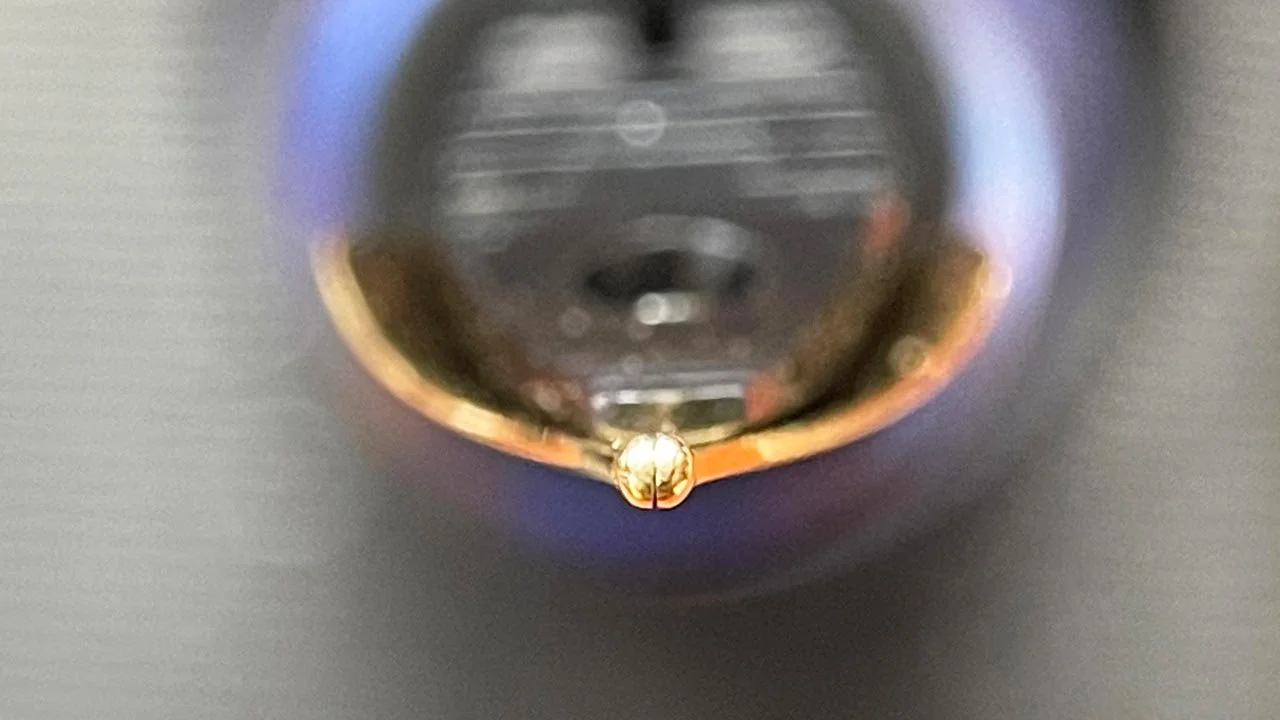
For consistency’s sake, I have another P20 here that has a very similarly tuned nib, so this all seems to be normal (although the eagle-eyed may notice that the feed on this one is slightly out of alignment). Honestly, as long as the nibs can function like this (and they do), it’s a good writing experience, and I have no real complaints. With that said, though, I’ll be adjusting mine to be just a tad wetter.

The grip section is comfortable as well, and while my fingers rest slightly on the threads for the cap, they’re fine enough that you don’t really notice them while writing. There’s also a slight step down past the ink window, but it’s far back enough that it’s a non-issue. I was able to write for roughly 3 hours using this pen without experiencing any kind of fatigue, so it passes the comfort test in my book.

So, is it a good pen?
Yes! Honestly, I’m impressed with the P20 — far more than I thought I would be. Minor flaws on the Ocean Blue aside, it’s a beautiful pen, and more importantly, it writes well. So well that I’ve found myself consistently wanting to pick it up. Given its low price, I think this would be an excellent choice for a first fountain pen for those getting into the hobby (with the caveat that it doesn’t seem to come in a broad nib option for those who might want that), but I also think this would make a great pen for those who are already well down the fountain pen rabbit hole, because again, it’s just a good pen.
Side note — a slightly larger version of this pen with Asvine’s new #8 nib would be really cool.
Links:
Find the Asvine P20 here! (Amazon)
Asvine wrench for disassembly (Amazon)
Asvine repair kit + wrench (Amazon)